
Underwater Radiated Noise
URN MANAGEMENT
Establishing a comprehensive Underwater Underwater Radiated Noise (URN) Management, track, and manage subsurface maritime assets with precision and real-time situational awareness across India's exclusive economic zone.
What is Underwater
Radiated Noise?
than in air
The ocean was once a quiet place. Today, it’s filled with a constant, low-frequency hum — most of it from ships.
What is URN?
Underwater Radiated Noise is the acoustic energy emitted by ships into the ocean — propellers, engines, and hull interactions all contribute to this constant low-frequency hum.
Why does sound travel farther underwater?
Water is ~800× denser than air, making it an excellent acoustic conductor. Sound loses less energy per unit distance, allowing noise to propagate thousands of kilometers.
Why is shipping dominant?
Over 90,000 commercial vessels operate globally, producing a near-continuous broadband noise that has doubled in intensity every decade.
Primary Sources of URN
Three distinct mechanisms generate noise as a ship moves through water.
Hover the diagram to explore each source.
Propeller Cavitation
Dominant broadband noise source. Vapor bubble collapse generates intense pressure pulses.
Machinery Noise
Diesel engines and pumps emit tonal noise. Vibrations couple directly into the water via the hull.
Hydrodynamic Noise
Turbulent flow and vortices around the hull create broadband noise. Worsens with speed and hull fouling.
Why URN Matters
Excessive ocean noise has two critical consequences — one ecological, one strategic.
Communication Disruption
Marine mammals rely on sound for navigation, mating, and finding food. Shipping noise masks these critical signals over thousands of kilometers.
Acoustic Signature & Stealth
Every vessel has a unique acoustic signature. Passive sonar can detect and classify ships at great range — reducing URN improves stealth and operational security.
The Sound Journey
From a ship's propeller to a whale's disorientation — follow the chain of consequence.
Ship Moves
Vessel underway at operating speed
Noise Generated
Propeller, engine & hull sources combine
Sound Radiates
Low-frequency waves spread in all directions
Marine Animals
Whales, dolphins and fish detect changes
Behavior Changes
Feeding, mating & navigation disrupted
Habitat Impact
Long-term ecosystem degradation
Shipping Radiated
Noise Mapping Tool
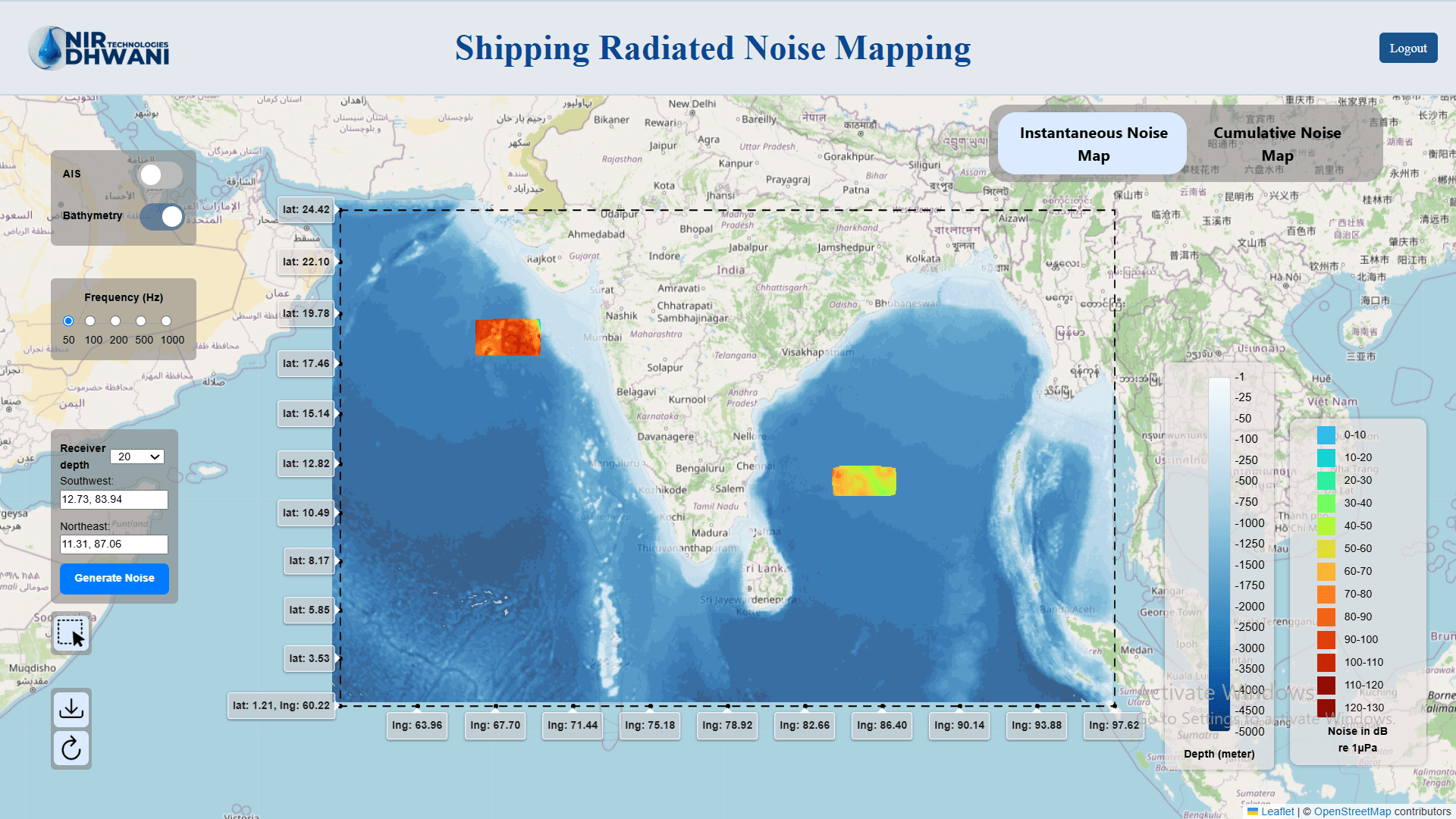
Developed collaboratively by the Maritime Research Centre (MRC) and Nirdhwani Technology (NDT), this interactive web dashboard provides dynamic, real-time assessment of Underwater Radiated Noise (URN) across the Indian Ocean region.
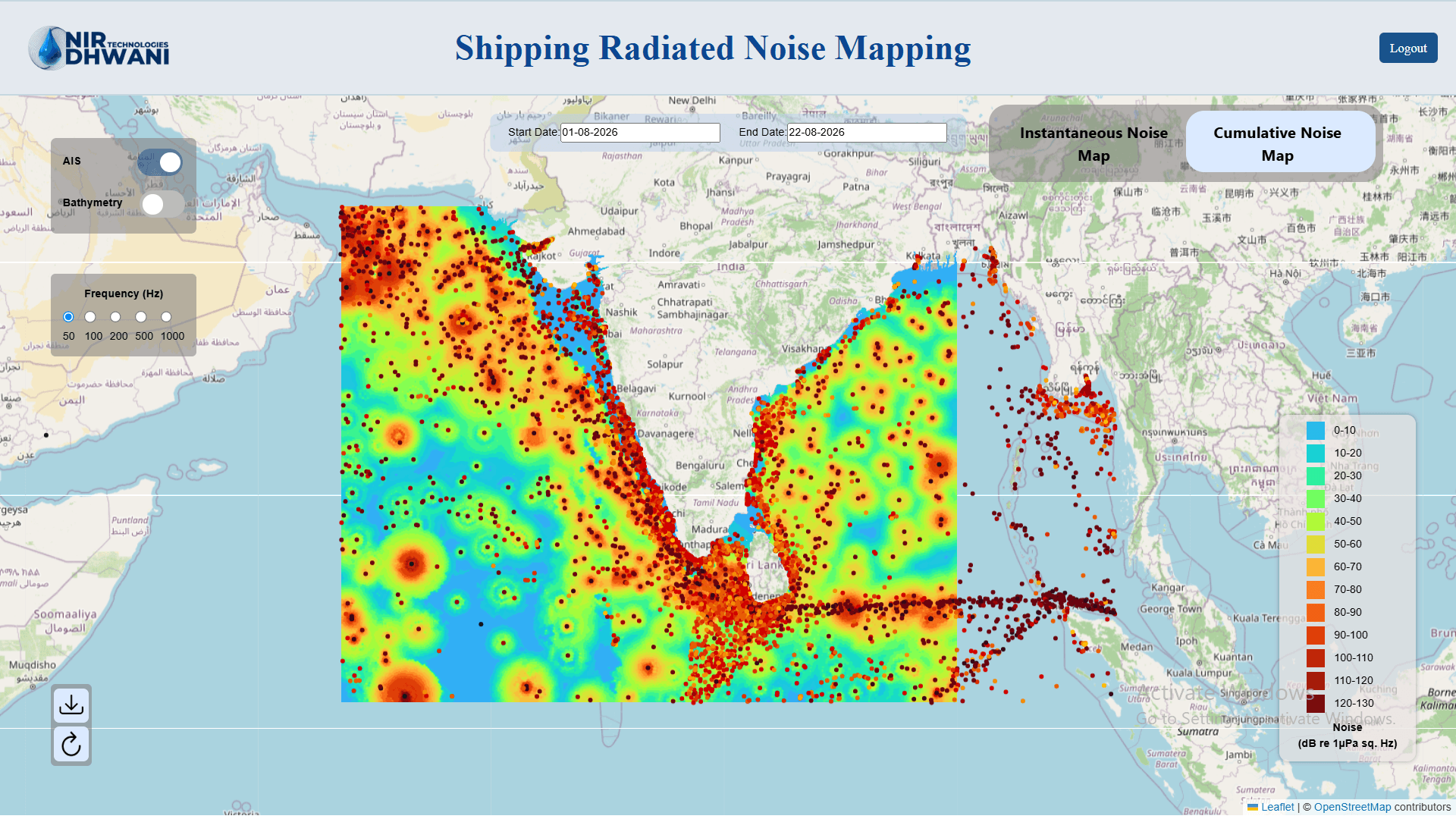
Users can toggle AIS data and Bathymetry layers to correlate shipping traffic with ocean depth. The tool allows precise control over analysis parameters, including configurable frequency bands ranging from 50 Hz to 1000 Hz and adjustable receiver depths for targeted acoustic profiling.
Generate localized Instantaneous Maps by selecting specific coordinate bounding boxes (Lat/Lng), or analyze long-term acoustic trends using Cumulative Maps that aggregate noise footprints across custom date ranges, providing crucial data for marine mammal conservation.
India's Leadership in
URN Management
Positioning India at the forefront of global ocean governance through innovative digital tools, proactive marine ecosystem protection, and strategic regional leadership.
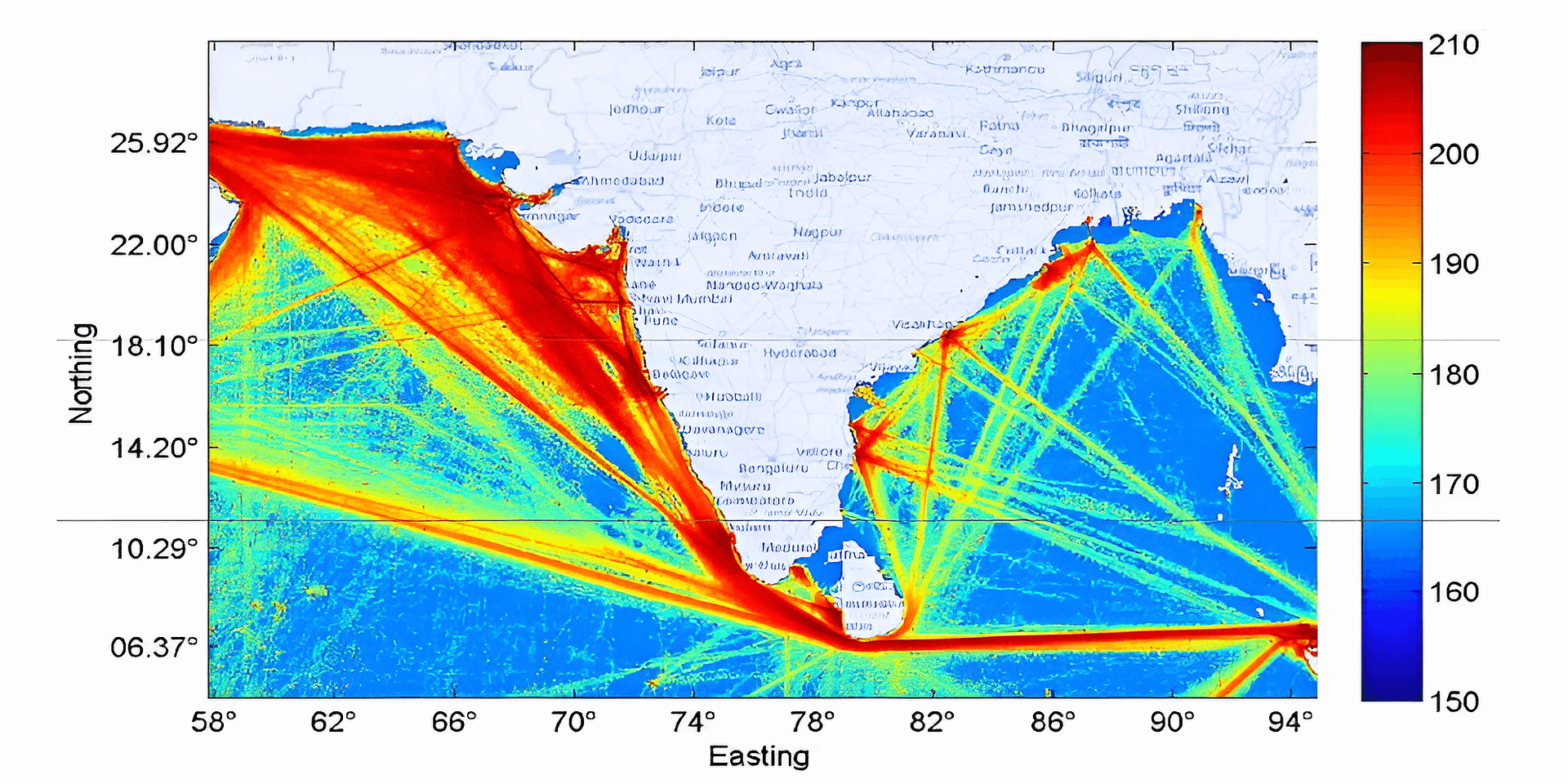
Through the Directorate General of Shipping, India introduced a pioneering digital framework for mapping underwater radiated noise. This critical initiative was successfully presented by MRC during the MEPC-76 sessions, establishing a new methodological benchmark for acoustic habitat assessments.
Following the formal acceptance of this proposal, India was designated as the lead nation for underwater noise management across the Indian Ocean Region (IOR). This prominent role amplifies the nation's influence in shaping sustainable international shipping guidelines and safeguarding vital marine ecosystems from long-term acoustic degradation.
Underwater Domain Awareness E-Learning Modules
Immerse yourself in specialized simulation-backed training modules designed to elevate your expertise in marine science, environmental governance, and acoustic engineering.


Basics of the Underwater World
Dive into fundamental marine hydrodynamics, ocean acoustic properties, and underwater environmental parameters.
URN Contributors & Fellows
More than 20 research fellows and scholars have played a vital role in advancing our Marine Spatial Planning initiatives.
Indian Institute of Technology, Madras
Shwetha Varshini
URN Management Tool

Indian Institute of Technology, Delhi
Akshita Mangal
Ambient Noise Mapping
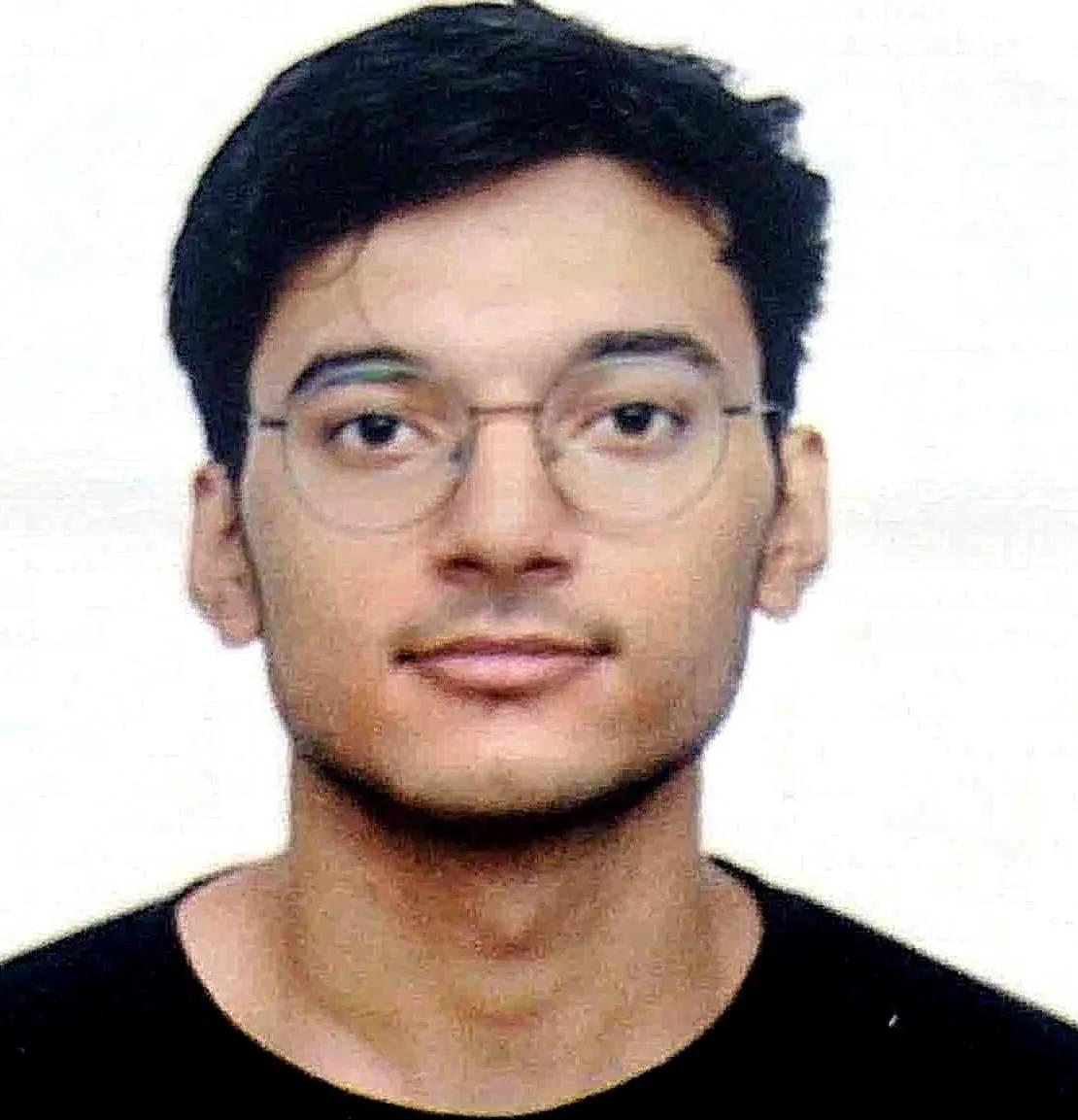
Indian Institute of Technology, Delhi
Sanskar Soni
Effective Detection model for Passive sonar Simulator

BITS, pilani
Ayush Kumar
GUI for spatio temporal Mapping
Research & Knowledge Hub
Curated publications, case studies, and simulation models from the URN research community.
Sediment Transport Study of Indian Tropical Rivers
Pradnya Kumbhare
3D Shipping Noise Mapping Model for the Arabian Sea
Rijul
Seaweed Farming in India: From Growth Barriers to Strategic Pathways for a Sustainable Future.
Shlok Nemani
Aquaculture Pond Precise Detection and Monitoring for Spacial Planning Using Deep Learning and Remote Sensing
Susank Chigilipalli
Seaweed Farming in India: From Growth Barriers to Strategic Pathways for a Sustainable Future
UDA Foundation
Underwater Channel Modelling – 3D Aspect in the Indian Ocean Region
Gokul Karthiik
Marine Eco-Concern and Its Impact on Indian Maritime Strategy
Authored by Dr. (Cdr) Arnab Das
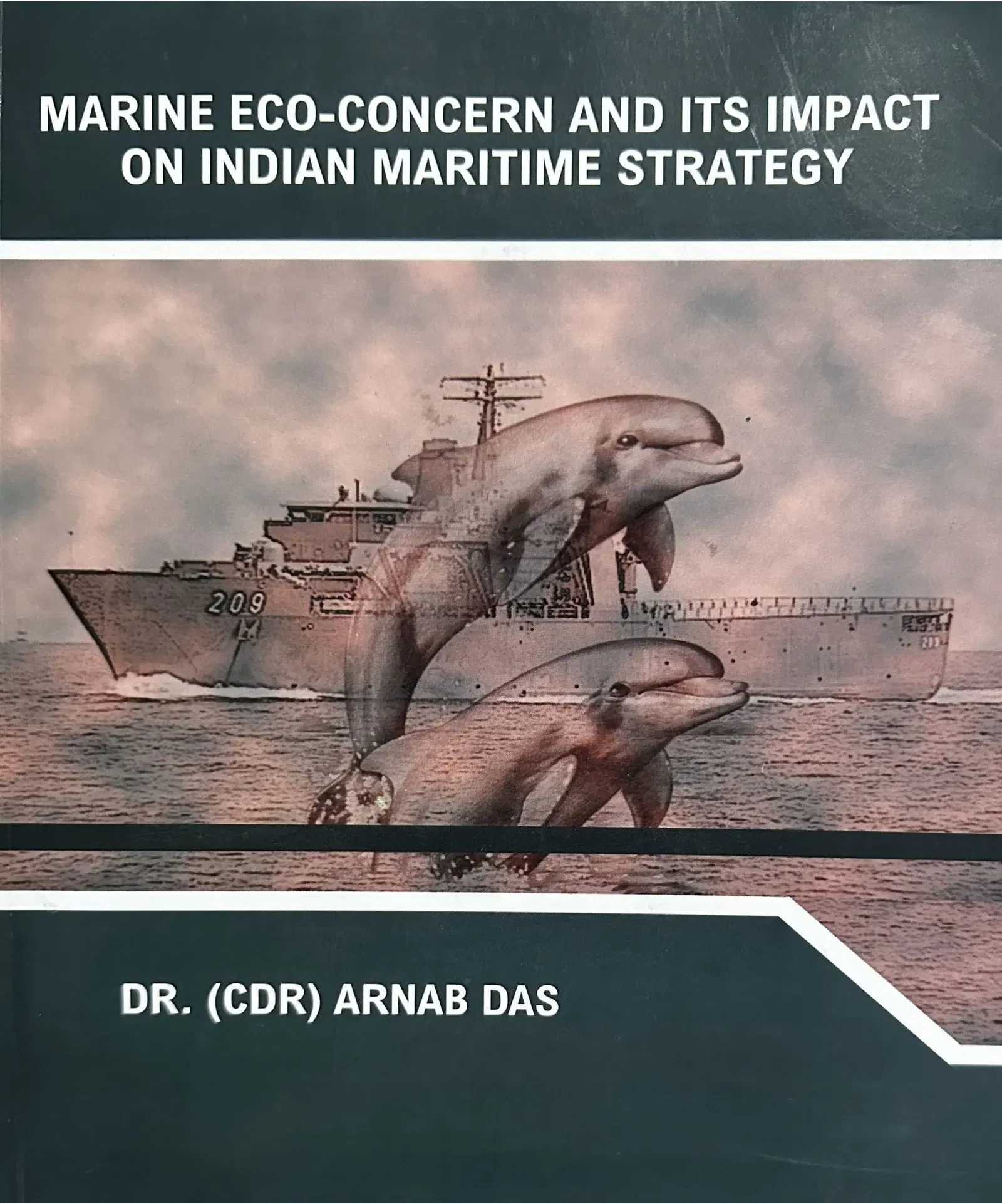
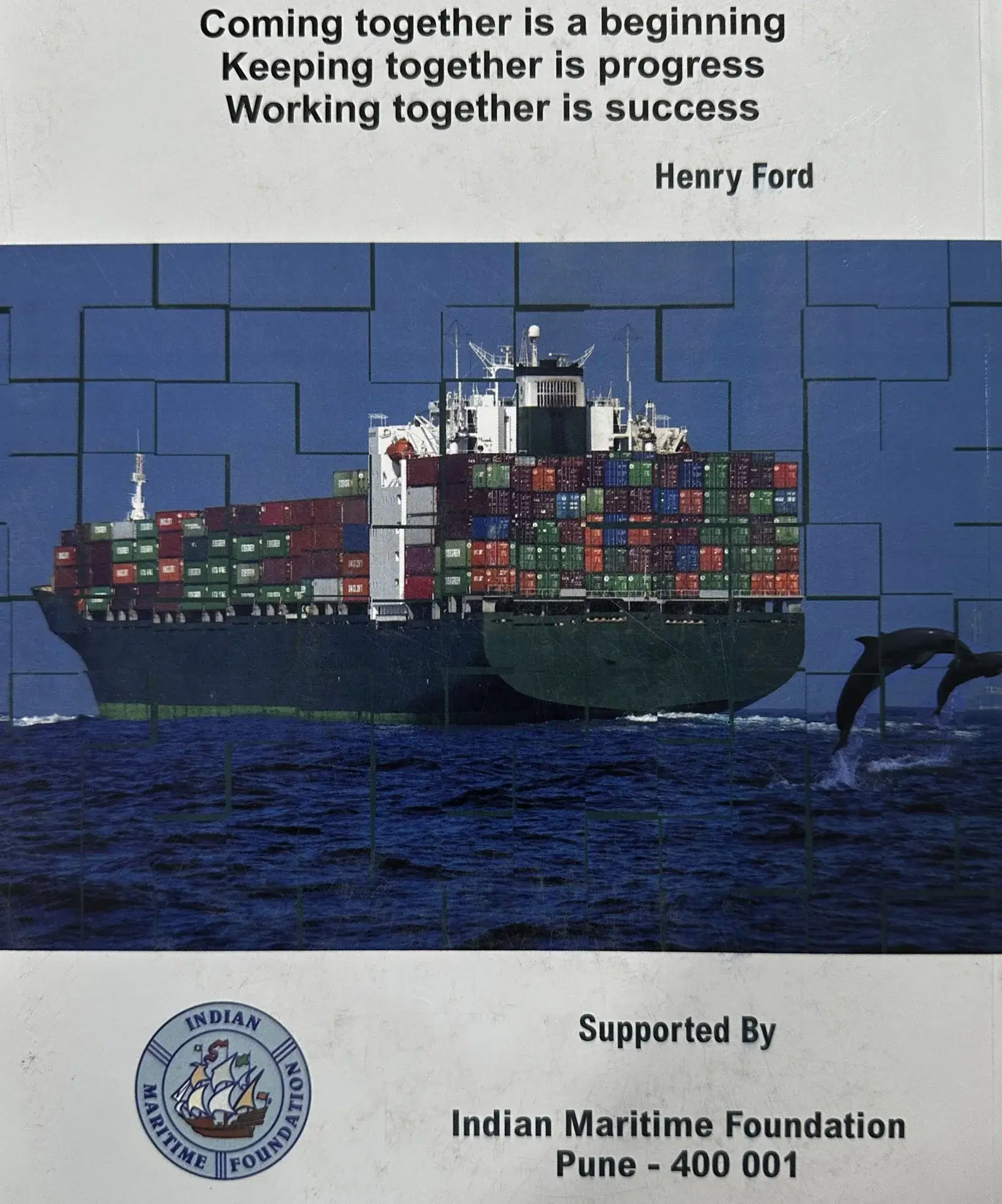
Marine Eco-Concern and Its Impact on Indian Maritime Strategy by Dr. (Cdr) Arnab Das delves into the critical intersection of environmental issues and maritime strategy. This book offers valuable insights into how marine ecological concerns shape the policies and operational tactics of India’s maritime forces.
Interested in exploring the strategic interplay between marine ecology and maritime operations? Click below to request your copy via our response form.