
Coastal & Marine Sciences
SEDIMENT MANAGEMENT
Applying advanced hydrodynamic modelling and geospatial analysis to understand sediment transport dynamics, safeguard coastal infrastructure, and restore natural sediment balance in India's critical marine zones.
What is Sediment
Management?
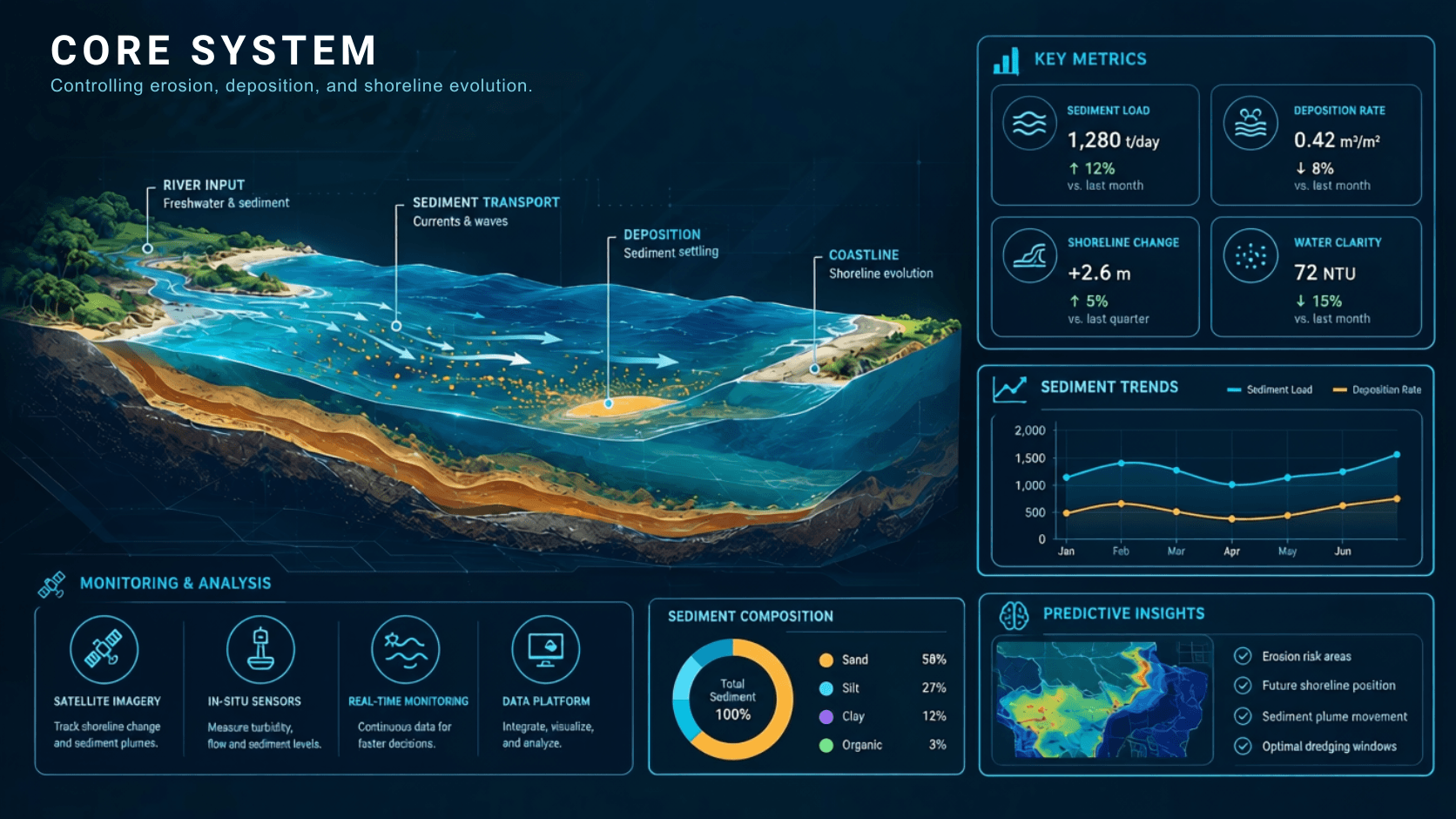
Sediment originates from natural erosion and geological processes, continuously traveling through rivers, estuaries, coastal waters, and open oceans. However, human interventions can deeply disturb this delicate sediment balance.
Excessive sedimentation or disruptions directly impact crucial reservoirs, navigable waterways, ports, coastlines, and fragile ecosystems. Sediment management provides a holistic framework to monitor and restore equilibrium from river catchments to the coast.
Why Sediment Management
Matters in the IOR
The Indian Ocean Region has highly dynamic tropical waters where sediment movement influences coastal ecosystems, navigation, water resources, infrastructure, and marine development.
From Sediment Data
to Policy
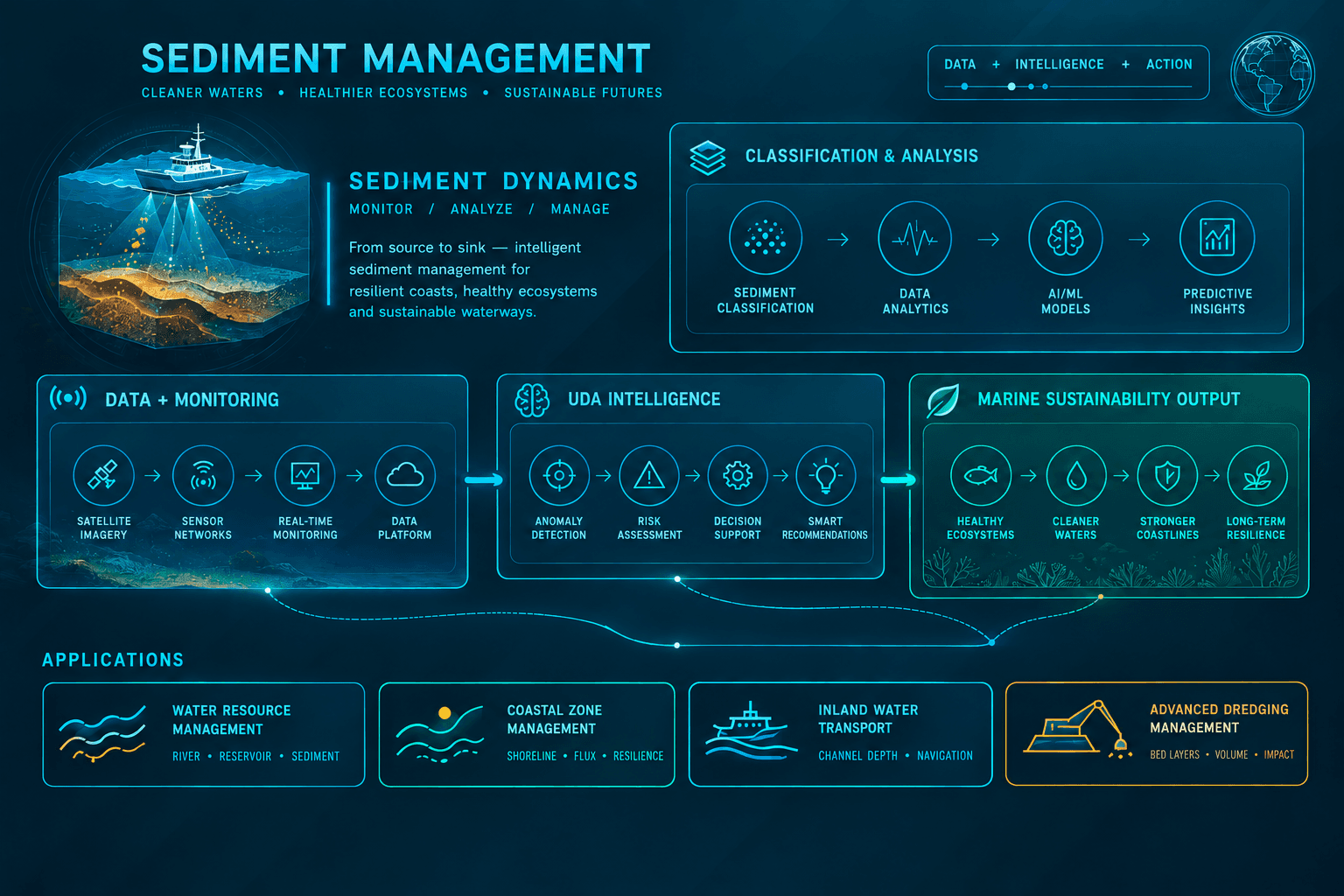
UNDERSTAND
Sediment & Seabed
Establish foundational mapping of bathymetry, particle origin, and natural hydrodynamic movement pathways.
ASSESS
Environmental & Development Impact
Evaluate how construction, dredging, and climate shifts disrupt ecosystem thresholds and commercial shipping channels.
MANAGE
Policy & Governance
Implement unified regulatory frameworks across regional governing bodies to sustain ecological and industrial balance.
Policy Interventions for Sediment Management in the Indian Ocean Region
This policy paper explores sediment classification and its crucial role in seabed exploration within the Indian Ocean Region (IOR). It highlights regulatory gaps at various governance levels and proposes key policy interventions for sediment-bearing pressure analysis, benthic ecosystem assessment, and abiotic element detection—underscoring the need for a unified framework aligned with national and international environmental regulations.
Understanding Sediment
Dynamics
Sediment Classification
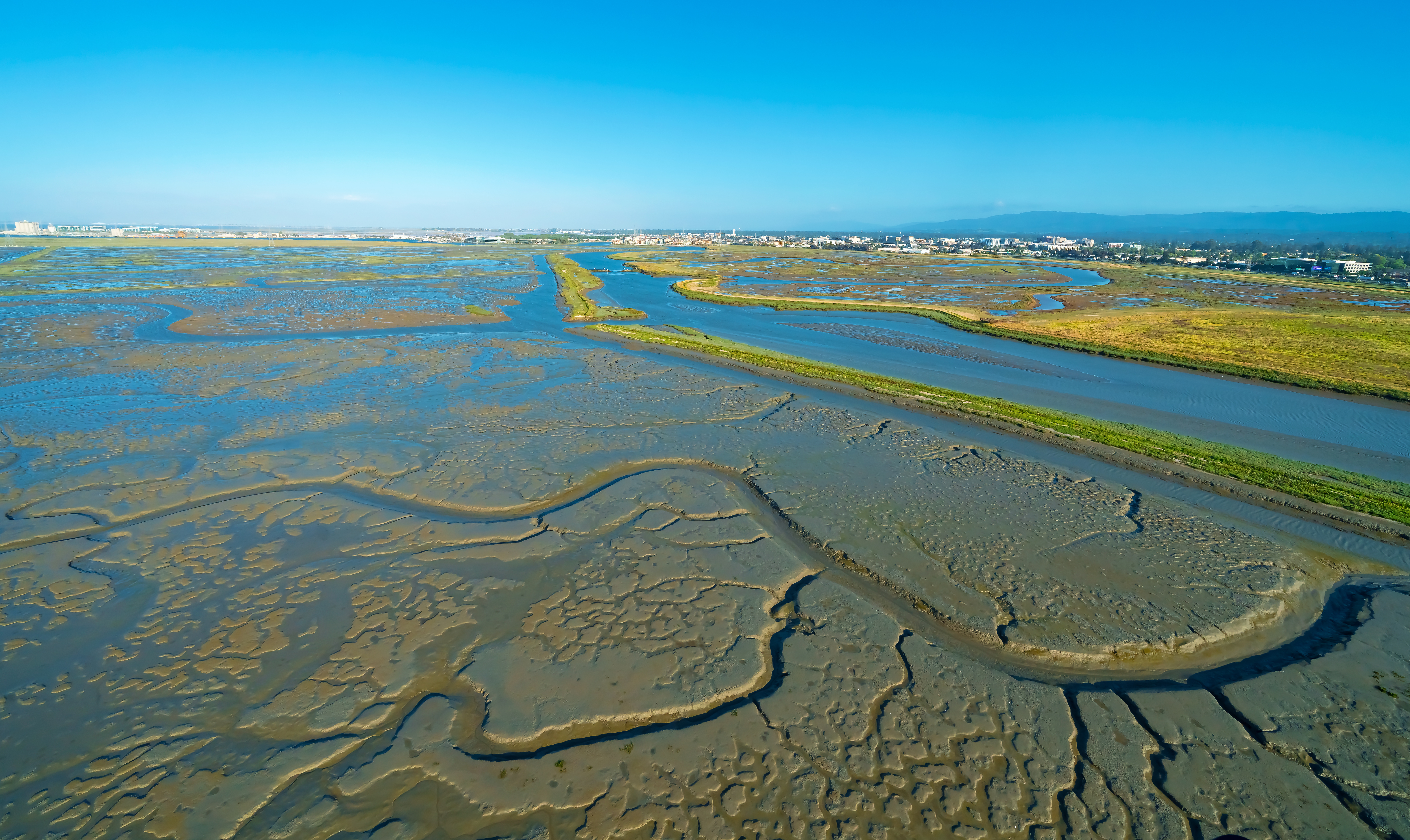
Sediment classification helps us understand seabed composition, sediment-bearing pressure, benthic ecosystems, and the suitability of marine areas for offshore development.
Sediment Transport Studies
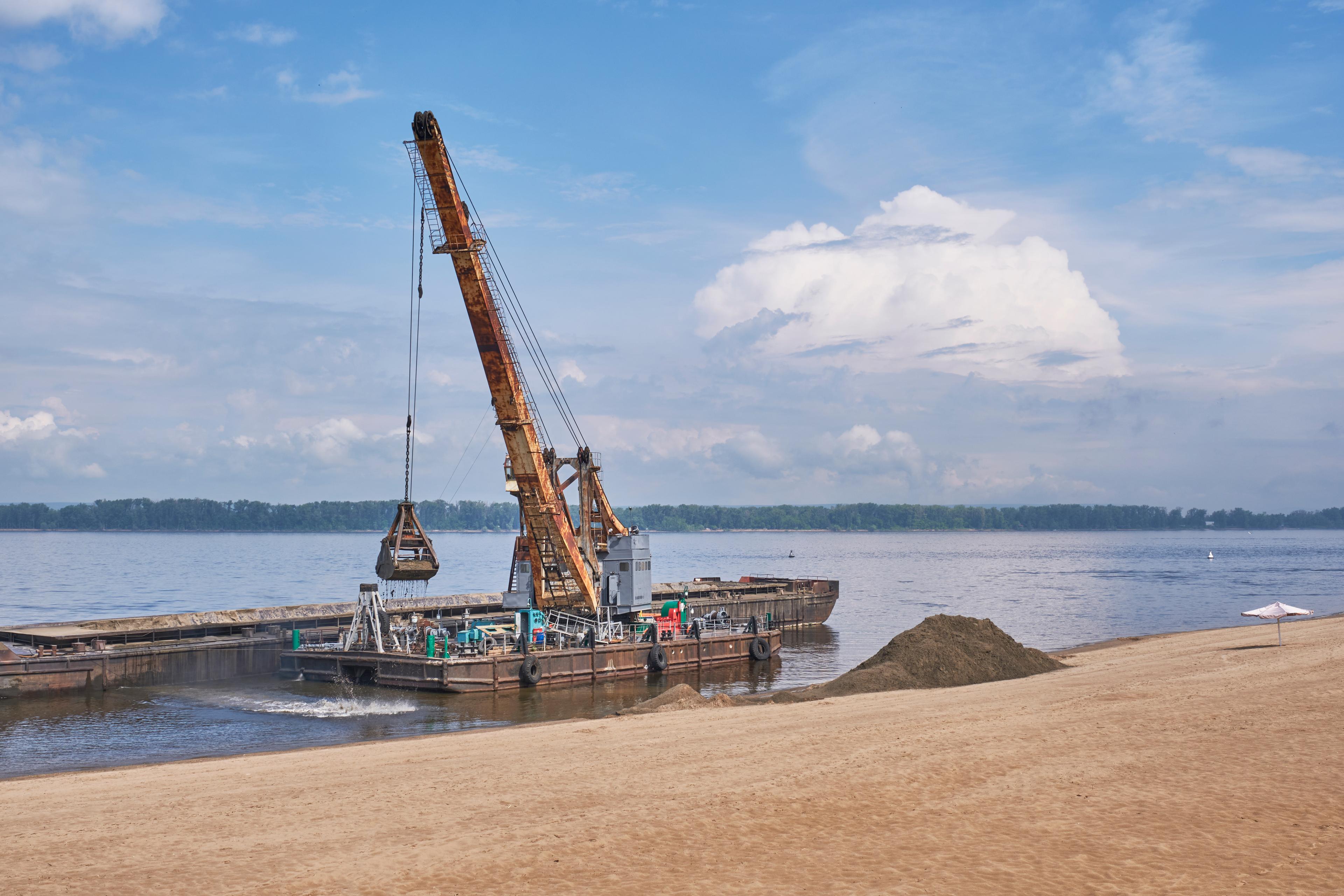
Understanding how sediment moves through rivers, estuaries, and coastal waters helps predict changes in navigation, water quality, coastal systems, and marine ecosystems.
UDA for Sediment Classification in the Indian Ocean Region
Explore the role of Underwater Domain Awareness (UDA) in advancing sediment classification and seabed exploration across the Indian Ocean Region. This position paper outlines methodologies for mapping benthic environments, assessing habitat vulnerabilities, and integrating geophysical data into sustainable maritime governance.
Underwater Domain Awareness E-Learning Modules
Immerse yourself in specialized simulation-backed training modules designed to elevate your expertise in marine science, environmental governance, and acoustic engineering.

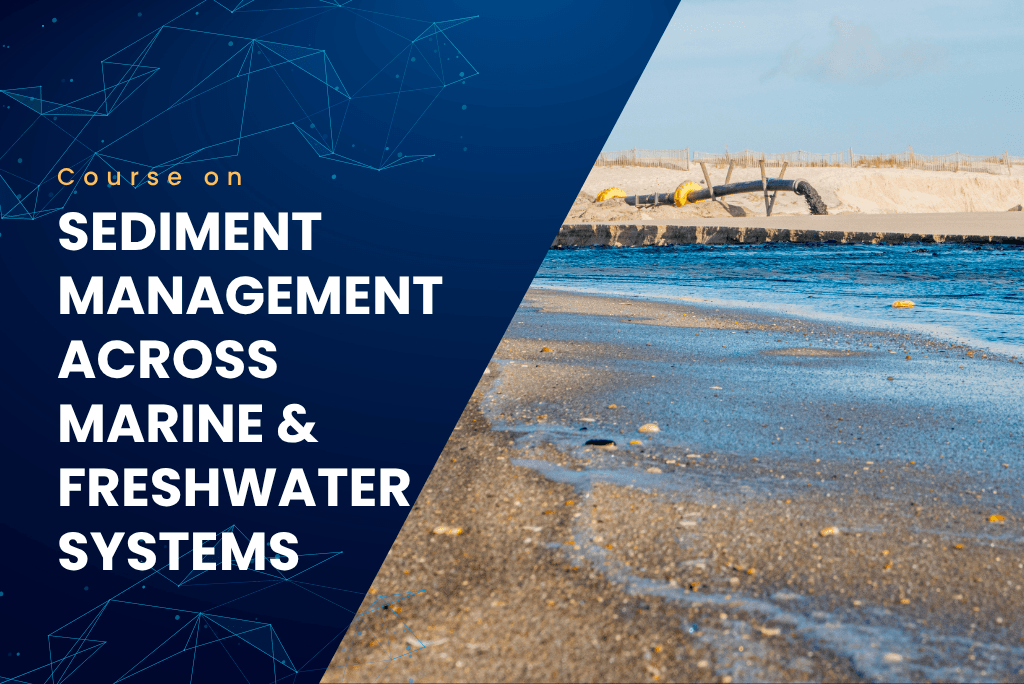
Sediment Management
Explore coastal morphology, marine dredging impacts, and simulation-driven sediment transport dynamics.
Sediment Contributors & Fellows
More than 20 research fellows and scholars have played a vital role in advancing our Marine Spatial Planning initiatives.
Indian Institute of Technology, Delhi
Rishika Khanna
Sediment Management for UDA Framework

Indian Institute of Technology, Delhi
Romit Kaware
Sediment classification in tropical waters for sediment bearing pressure analysis

Indian Institute of Technology, Bombay
Pradnya Kumbhare
Sediment Management Transport Study

Indian Institute of Technology, Bombay
Bhavin Jain
Sediment classification using machine learning
Research & Knowledge Hub
Curated publications, case studies, and simulation models from the URN research community.
Sediment Transport Study of Indian Tropical Rivers
Pradnya Kumbhare
3D Shipping Noise Mapping Model for the Arabian Sea
Rijul
Seaweed Farming in India: From Growth Barriers to Strategic Pathways for a Sustainable Future.
Shlok Nemani
Aquaculture Pond Precise Detection and Monitoring for Spacial Planning Using Deep Learning and Remote Sensing
Susank Chigilipalli
Seaweed Farming in India: From Growth Barriers to Strategic Pathways for a Sustainable Future
UDA Foundation
Underwater Channel Modelling – 3D Aspect in the Indian Ocean Region
Gokul Karthiik
Marine Eco-Concern and Its Impact on Indian Maritime Strategy
Authored by Dr. (Cdr) Arnab Das
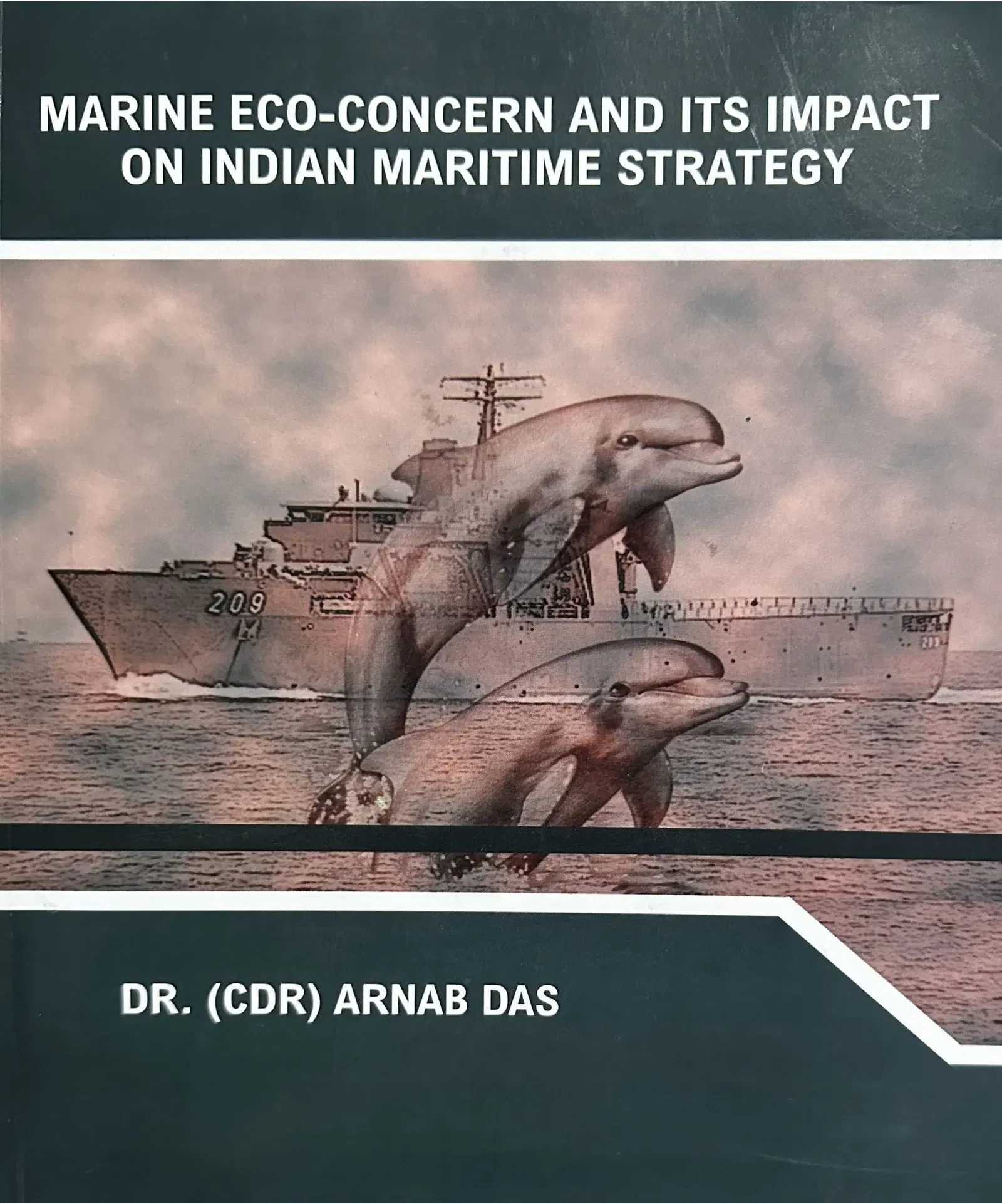
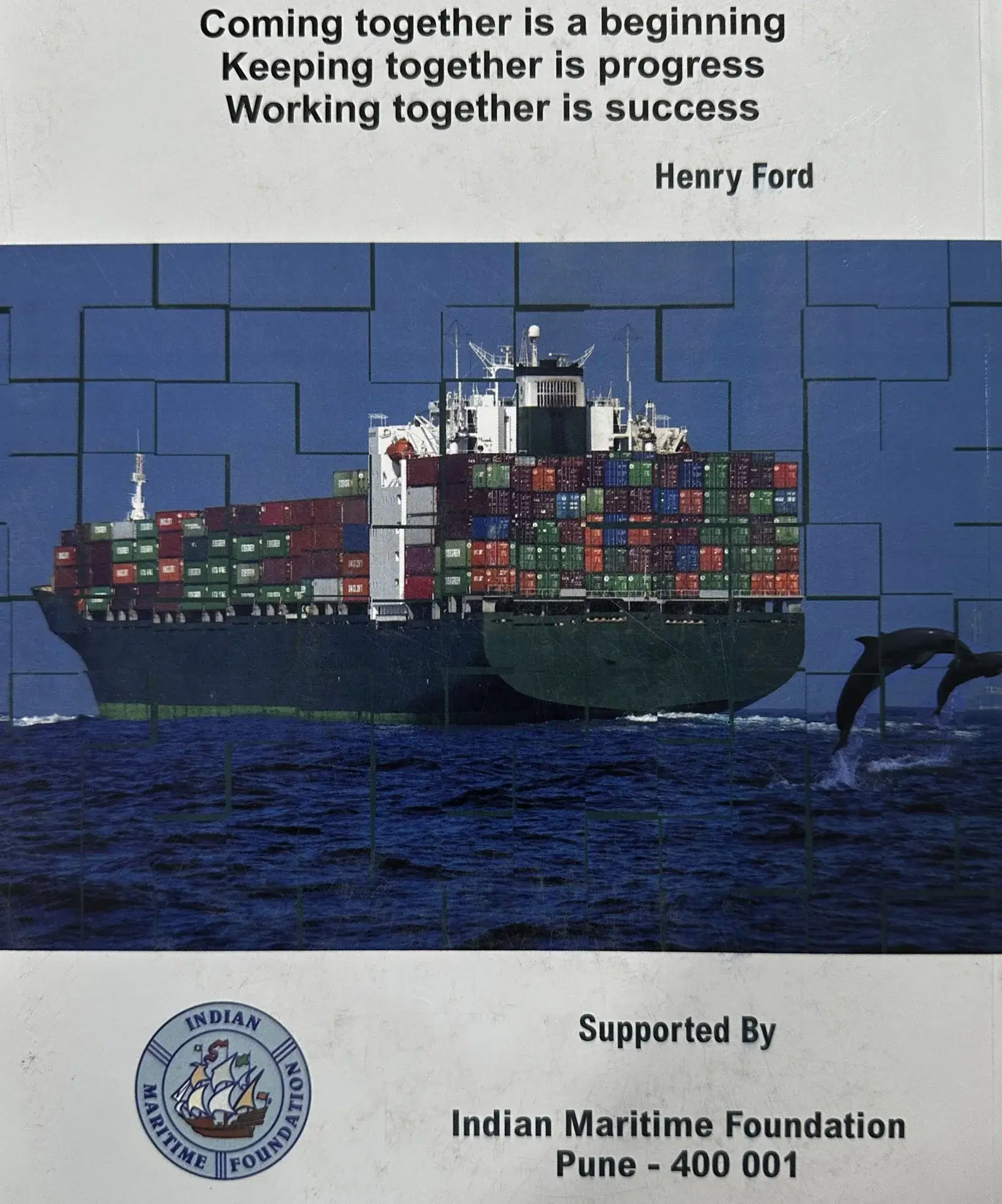
Marine Eco-Concern and Its Impact on Indian Maritime Strategy by Dr. (Cdr) Arnab Das delves into the critical intersection of environmental issues and maritime strategy. This book offers valuable insights into how marine ecological concerns shape the policies and operational tactics of India’s maritime forces.
Interested in exploring the strategic interplay between marine ecology and maritime operations? Click below to request your copy via our response form.